No Cloud Required: Talking Directly to My SunPower Hardware
TL;DR: I discovered an official API for my SunPower hardware. I can use Python (or whatever) to talk to my system.
BACKGROUND
I bought a Sunpower solar/battery system in January 2023. After securing permits, installation began later that year. Despite some hiccups, such as having to reboot and reset everything when the battery is exhausted, the system works well enough. We survive power outages by flipping breakers to run the refrigerator and nothing else. When the house is quiet and only the refrigerator is drawing power, the site load drops to around 0.1 kW.
⚡Record: 80 hours without power on February 2024
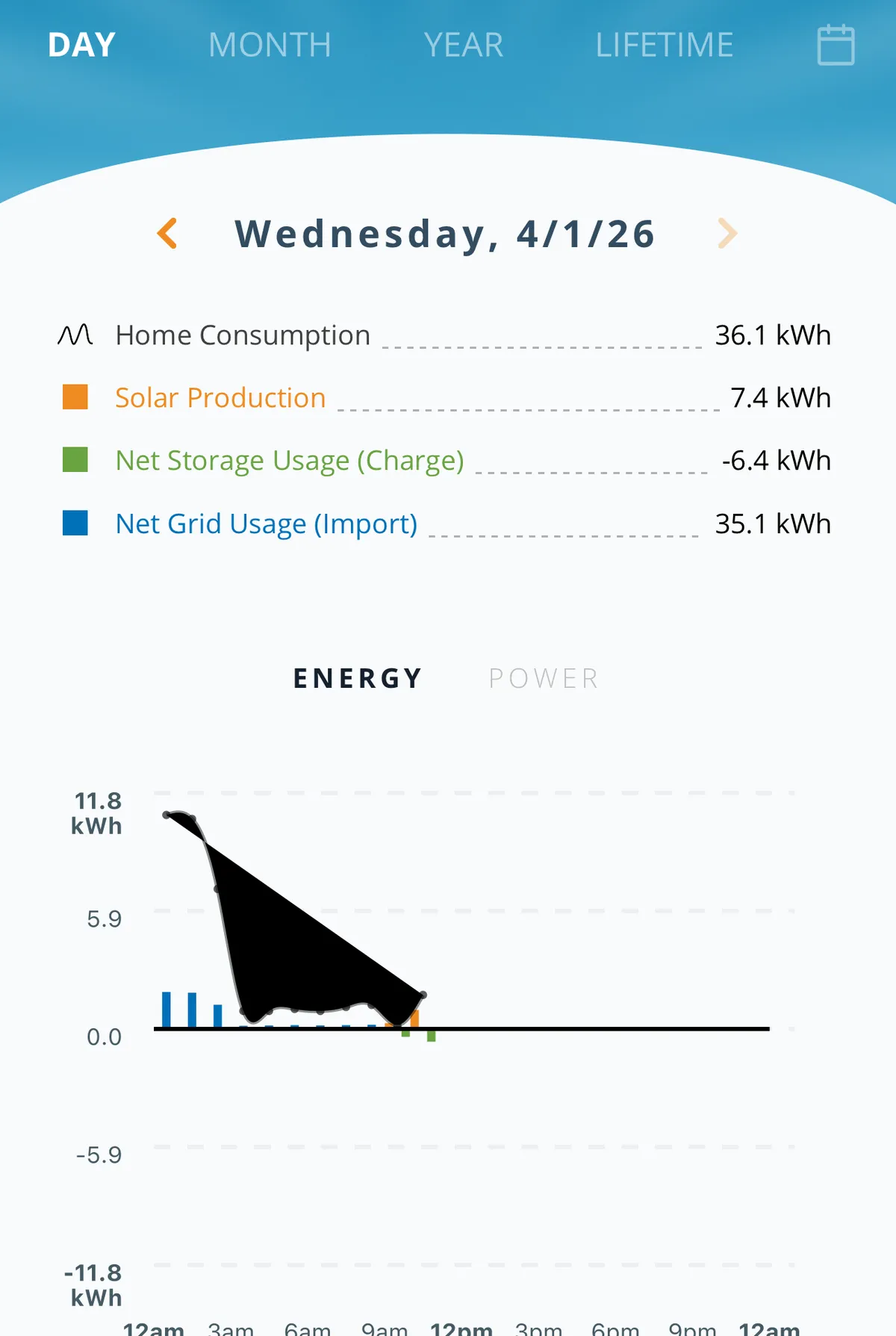
SunPower filed for Chapter 11 bankruptcy on August 6, 2024. SunStrong Management, which bought out SunPower's share in SunStrong Capital, took over the monitoring app. They wanted $200/year for the app! Excessive but not too surprising: Supporting their goofy, bespoke app for a tiny customer base can't be cheap. I wasn't completely surprised when the latest release, 1.1.8 (10981), broke chart rendering. No idea how this version made it out of QA.
THE SUNFLOWER CLUE
While researching a replacement, I came across a third party app called Sunflower.
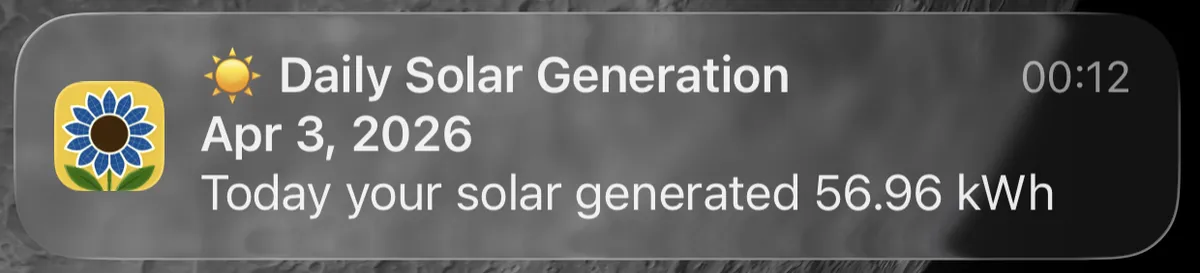
To my complete surprise, Sunflower could connect directly to the monitoring gateway. All I had to do was put the PVS6 on my Internet of Shit network (a dedicated wireless segment for untrustworthy devices), disable client device isolation, and assign it a static IP. But how the heck was Sunflower talking to it when my own attempts failed?
% curl '10.10.10.134/cgi-bin/dl_cgi?Command=DeviceList'
{ "status":403, "error" : "Unauthorized", "path":"" }
AN EXCITING DISCOVERY
After Kagi-ing around, I was floored to discover that SunStrong has published official documentation for the local API including how authentication works. The username is always ssm_owner and the password is the last five characters of the serial number.
WHAT I BUILT
Here's a Python script to explore PVS6 data: pvs6_query.py
It expects two environment variables:
PVS_IPe.g. 10.10.10.134PVS_SERIAL
Output:
PVS6 Local Monitor
Device : 10.10.10.134
Auth   : ssm_owner:*****  (19-char serial)

────────────────────────────────────────────────────────────
  Gateway / Firmware
────────────────────────────────────────────────────────────
  Model                              PVS6
  Serial                             <redacted>
  SW version                         2025.10, Build 61846
  FW version                         1.0.0
  Build                              61846

  ✓ Authenticated  (session: REDACTED)

────────────────────────────────────────────────────────────
  Live Power  (updates every ~15 s)
────────────────────────────────────────────────────────────
  Timestamp                          2026-04-01 11:19:32 PDT

  Solar PV output                    +6,688 W
  Site load                          -5,801 W  (negative = consuming)
  Grid                               -5,794 W  (negative = exporting ✓)
  Battery                            -7 W  (− charging  + discharging)

  Lifetime solar generated           37,650.1 kWh
  Lifetime net grid                  3,978.7 kWh
  Lifetime site load                 2,480.6 kWh
  Lifetime battery net               -1,498.2 kWh

────────────────────────────────────────────────────────────
  Battery (ESS / SunVault)
────────────────────────────────────────────────────────────
  Operating mode                     TARIFF_OPTIMIZER
  Measurement time                   2026-04-01 11:10:00 PDT

  State of charge (SOC)              100.0%
  Customer SOC                       100.0%  (what the app shows)
  State of health (SOH)              100.0%
  Minimum customer SOC               50.0%  (reserve floor)

  Battery power now                  -7 W
  Charge limit                       +178 W
  Discharge limit                    +10,117 W

  Battery voltage                    54.23 V
  AC voltage L1                      120.05 V
  AC voltage L2                      120.05 V
  Inverter temp                      35.9 °C
  Cell temp (max)                    29.9 °C
  Cell temp (min)                    2.1 °C
  Cell voltage (max)                 3.41 V
  Cell voltage (min)                 3.38 V

  Lifetime charged                   2,246.5 kWh
  Lifetime discharged                3,744.6 kWh

  Product model                      SPWR-Equinox-model
  Serial(s)                          <redacted>

────────────────────────────────────────────────────────────
  System Info (varserver)
────────────────────────────────────────────────────────────
  hwrev                              6.02
  sw_rev                             2025.10.20.61846
  boardtype                          B0K LIB 1.0 PSoC5
  model                              PVS6
  serialnum                          <redacted>

────────────────────────────────────────────────────────────
The 37,650 kWh of lifetime solar generation represents about three years of production from our system in Monterey, California.
TARIFF_OPTIMIZER is a neat trick: Using the Sunstrong app I can feed power back to PG&E starting at 4PM M-F.
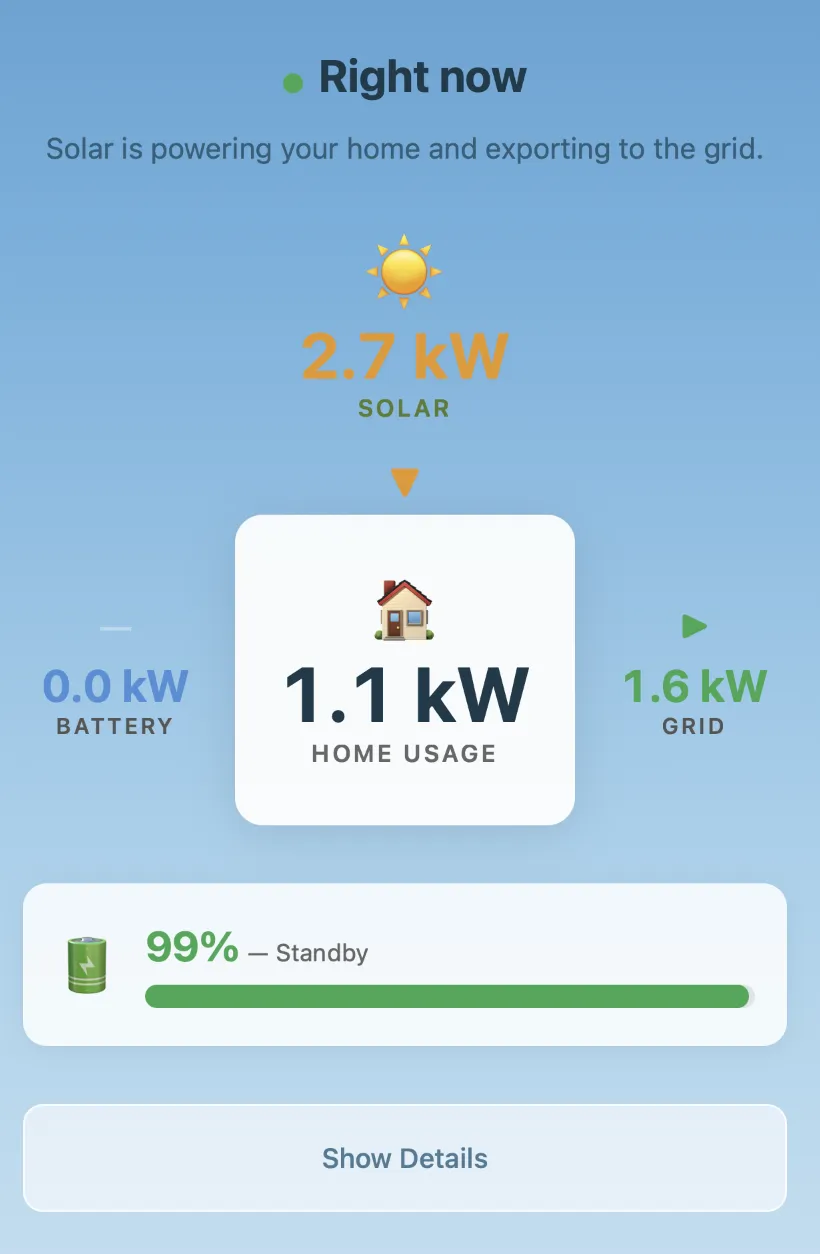
My very silly web UI on mobile:
SO WHAT
Any SunPower/SunStrong customer with a PVS6 and a local network can do this!
Not sure what's next. I don't run Home Assistant but I do have some plans including:
- Monitoring (to make sure the battery is actually charging)
- Alerting (poke me on Slack if something is broken)
- Charts/Graphs
REFERENCES